Pascal wrote in the 17th century: “All of humanity’s problems stem from one thing: man’s inability to sit quietly in a room alone.”
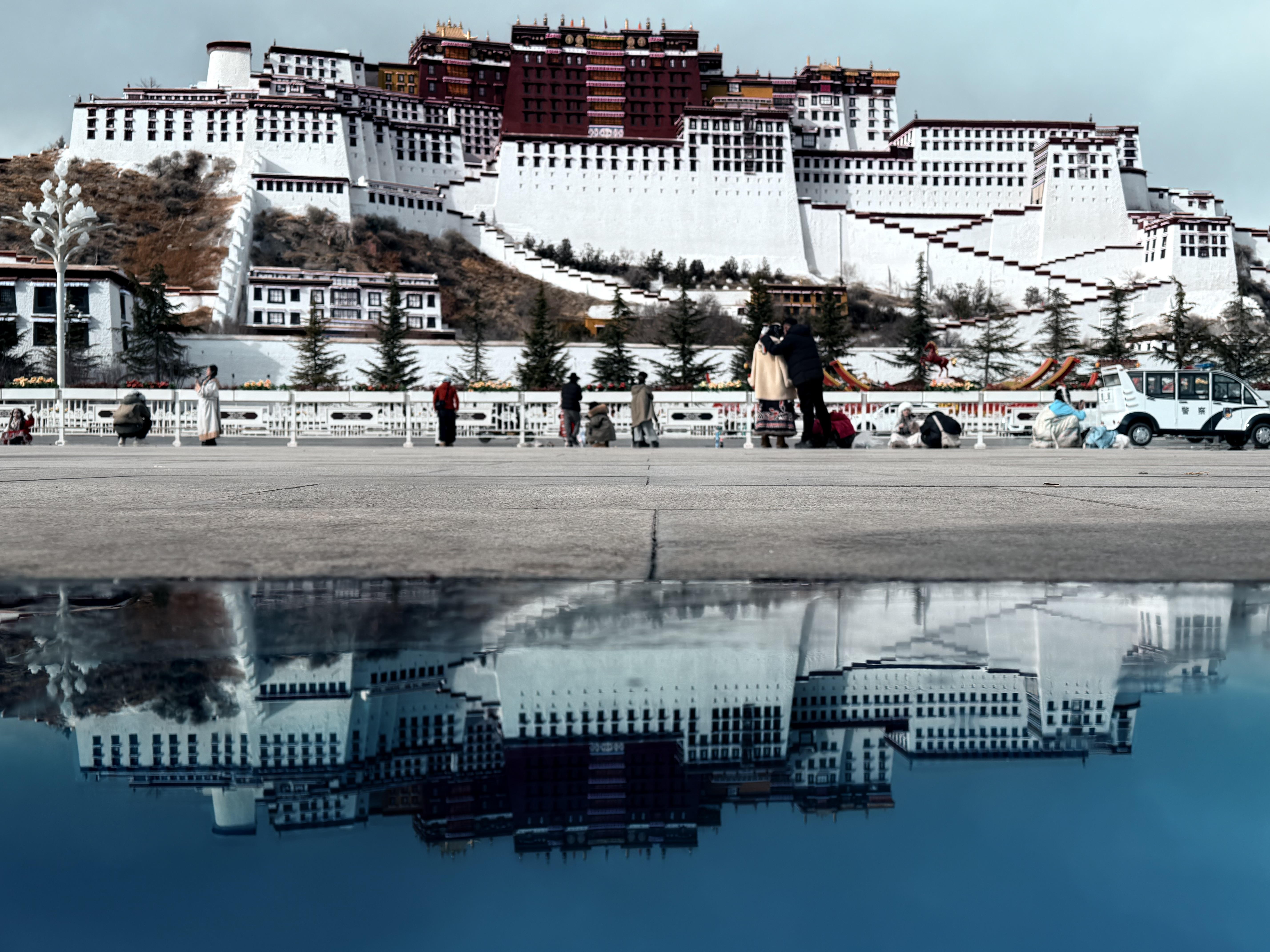
Three hundred years later, I thought of this sentence late at night in Lhasa, and added one more: They’re not sure who exactly is the one sitting in that room.
Introduction: The 3 AM Emptiness
For a while, I woke up almost every day at 3 AM.
Not because of anything urgent. It was closer to a formless anxiety, like a thin thread pulling at somewhere in my brain—light enough not to break, but strong enough to fish you out of sleep.
I eventually figured out what that thread was: one night, I used AI to write a piece of technical documentation. When I went back to read it, I found it clearer than anything I would have written myself. Not just clearer—the structure was more reasonable, the wording more precise, and it had even fixed a boundary case I hadn’t noticed.
I stared at the screen for a long time.
The feeling was hard to describe. Not anger, not panic—closer to a kind of hollowness. Like you thought you were doing something important, and then suddenly realized that thing didn’t need you.
At first, I interpreted this as career anxiety. The programmer’s moat is narrowing, technical barriers are disappearing—these are facts, acceptable, adaptable.
But that thin thread didn’t disappear. It kept pulling at me in the night.
Eventually I slowly realized: career anxiety is just the surface layer. The deeper one is:
The way I evaluate my own value is “what I can do.” If AI can do it better—then what weight does “I” have here?
1. We Mistook “Being Needed” for Weight Itself
This isn’t just my problem.
Our generation was trained from childhood to be “useful” people. Study to be able to do things, do things to be employed, be employed to be needed, be needed to have a sense of existence. This logic chain is so tight that we never questioned its premise:
Is sense of existence really propped up by “being needed”?
Byung-Chul Han wrote about a concept in The Burnout Society: the achievement subject (Leistungssubjekt). He said the biggest change in modern society isn’t that oppression comes from outside—it’s that it’s become self-imposed. We’ve internalized the market’s demands on us and started spontaneously measuring ourselves by “how much we can produce.” Exploitation no longer needs an external oppressor—we’ve taken on that role ourselves.
This way of measuring was already fragile before AI appeared. It could be shattered by external environment at any time—laid off, and the weight is gone; lose a key project, and the weight collapses; retire, and where does the weight go?
AI just pushes this logic to the extreme: If all your “usefulness” can be replaced, where does your weight come from?
This is a cruel question. But it’s cruel precisely because we’ve built the foundation of our self on the wrong place.
2. Tsangyang Gyatso Encountered This Problem Long Ago
During those days in Lhasa, I thought of Tsangyang Gyatso many times.
He was born in the wilderness, his youth complete—running through fields, chasing girls, living bodily impulses and inner freedom as one whole. Then overnight, he was identified as the Sixth Dalai Lama. The entire Potala Palace fell on his shoulders, the entire political-religious system demanded he become a functional symbol: holy, transcendent, not belonging to himself.
His solution was escape—sitting on the throne during the day receiving worship, slipping into the taverns of Barkhor Street at night under the assumed name Dangsang Wangpo, drinking, making love, writing poetry.
How can there be a way to be true to both Buddha and love?
This poem is often read as a love poem. But I stood at the foot of the Potala Palace, gazing at that place called “Snow City,” feeling its weight far exceeded that.
Buddha represents the function assigned to him—what that system needed him to be.
Love represents his real feelings—the living, aching, loving part.
Three hundred years later, our situation wears a different exterior. No longer political-religious authority forcing us to become symbols—it’s market logic, performance evaluation, AI performance benchmarking. But the struggle is the same:
When the world looks at you through a functional lens, how do you preserve the part that says “I am a person”?
Tsangyang Gyatso’s ending was tragic. But his poetry lived on. Those poems were useless—they didn’t improve anyone’s efficiency, didn’t solve any problems, just spoke out the struggle of a human heart.
Yet they’ve lived until now. That fact itself is a kind of answer’s shape.
3. Zhuangzi’s Useless Tree
There’s a great tree in Zhuangzi: The Human World.
A carpenter passed by, wouldn’t even look at it, disdainfully saying: scattered wood, useless—make a boat and it’ll sink, make a coffin and it’ll rot, make a pillar and it’ll worm, nothing works.
That night, the tree appeared in his dream: those trees you consider “useful”—precisely because they’re useful, they were cut down. I am useless, which is why I’ve lived this long, grown this big.
The use of uselessness is the great use.
This sentence has been repeatedly quoted, but most interpretations still fall back into the “useful/useless” framework—it looks useless, but is actually another kind of useful. This interpretation is too utilitarian. What Zhuangzi was saying is something more fundamental:
Is there a kind of existence whose value doesn’t need to be measured from the dimension of “use” at all?
That tree exists—not to make furniture, not to provide shade, even less to be needed by someone. It’s just growing, here, in its own way.
This isn’t passive—it’s another understanding of existence: existence itself is the reason, not a means to something else.
In the AI age, this becomes very concrete. If all your functional value can be optimized and replaced, what cannot be replaced is precisely the fact of you as a concrete person “being here”—that “presence” that sees the world, feels the world, gets hit by the world from a unique perspective.
4. Feeling Is the Only Thing That Cannot Be Outsourced
In Lhasa, there was a night I stood in the courtyard watching the moon for a long time.
No particular reason. Just that the moon was close, the air clean, nothing much in the mind.
I thought of Natsume Soseki refusing to translate “I love you” directly into Japanese. He said it should be translated as: “The moon is beautiful tonight.”
That space of the unsayable is something in how humans feel the world that is always more than language can express.
AI can generate ten thousand poems about the moon, can analyze moonlight’s effect on human melatonin, can tell you why Lhasa’s moon is brighter than the plains.
But it doesn’t know, in that moment, at over 3,000 meters altitude, me standing alone in a courtyard, what that moon meant to me.
Not because I’m special. But because that “what it meant” is all the experiences of my life striking that moment, forming a unique resonance—that step on the ice slope in Nepal, that cup of hot tea in Pokhara that made me cry on the subway, that emptiness of walking alone on a mountain road in Wugong Mountain at midnight, those two coins the old grandpa stuffing a roasted sweet potato into my hand on a Shanghai bus. All of these were present, but you don’t know they were present, they just struck in.
This resonance—any outsourcing loses it.
Viktor Frankl discovered one thing in the concentration camps: meaning cannot be given, only discovered—and moreover, only by the person in that concrete situation. No one can bear your life for you, no one can feel it’s worthwhile for you.
This isn’t comfort—it’s a structural fact:
Feeling is the only truly unoutsourcable thing.
5. Attention: The Rarest Generosity
In Pokhara, the waitress at that small restaurant remembered what I ordered last time.
I hadn’t been for two or three weeks. When I went back, she directly asked: the same as last time?
My first reaction was surprise, my second was some deep warmth rising up. So many faces coming and going, she remembered what I ordered. That wasn’t efficient service—that was attention—real attention directed toward me.
Later I took the doll off my backpack strap and gave it to them. The next day they made me a cup of hot tea.
Recalling this on the subway, tears streamed down my face.
Simone Weil said: “Attention is the rarest and purest form of generosity.”
I keep thinking about this sentence.
“Being needed” is functional—you have some use, so the other person needs you. “Being noticed” is another matter—the other person sees you as a concrete person, not because you have some use, just because you’re here, they’re looking at you.
These two experiences are essentially different. One lets you know you have value, the other lets you feel you exist.
The thing that maintains the weight of self is closer to the latter.
6. The Moment Narrative Stops
Last year at Namtso, just as the sun was setting, the lake was that deep layer of blue-green, from light cyan at the shore to peacock blue in the middle to indigo in the distance. The distant snow mountains were still. I stood like that for a long time, didn’t take many photos.
I noticed that the voice constantly running in my head—the one endlessly organizing experiences, constructing meaning, wanting to explain everything clearly—in that moment, it stopped.
Not blankness, but a deeper presence. That internal monologue constantly narrating “what I’m experiencing, what this means, how I should think about it”—finally quiet for a while.
Only the lake, only the light, only my feet on that land.
Later I wrote a sentence in my notes: When narrative stops, only then do you discover experience itself is much heavier than narrative.
We use language to capture the present to keep it. But the more skilled you are at capturing, the more you miss the present itself in the moment of capture. The AI age makes this paradox sharper—all “meaning production” can be sped up, outsourced—but what’s sped up and outsourced is only the narrative part. Experience itself has no fast-forward button.
End: Not an Answer, But a Stance
That 3 AM thread is still here. I haven’t cut it off, haven’t found a way to cut it.
But I’m clearer now about what it’s pulling at.
Not career anxiety—a much older question: living, is there a weight that doesn’t depend on being needed?
Tsangyang Gyatso held onto that weight with his poetry, at the cost of the entire court’s opposition, finally disappearing in political turmoil. Zhuangzi described its shape with that useless great tree. Frankl, in the concentration camp, with everything stripped away, found its core in the “freedom to choose one’s attitude” that remained.
I caught a glimpse of it in a courtyard in Lhasa, glimpsed by an ordinary moon.
In Pokhara, placed directly into my chest in one second by a cup of hot tea.
The common thread of these moments: none of them are “useful.” No output, no efficiency, no archivable conclusion. They just really happened, struck in, remained.
I slowly feel—that’s where the answer lies.
Not a solution to “how to exist in the AI age”—this question is too big, maybe there is no solution. But a stance: Keep that opening that can be struck into. Keep feeling, keep uselessness, keep standing well in those moments when narrative stops.
Natsume Soseki said the moon is beautiful tonight—that unsayable part has always been humanity’s margin.
Has AI made that margin narrower? I’m not sure.
But I know: as long as there’s still someone in a courtyard in Lhasa, because of one moon, feeling some inexplicable preciousness—that margin is still there.
Responses