Dissecting open-lovable: An App Generator That Tames the Raw API Without an Agent Framework

Paste a URL, and in seconds an AI rebuilds it into a running, previewable, chat-editable modern React app. That’s the first impression of firecrawl/open-lovable — 27k stars, 5.2k forks, 94.9% TypeScript, a flagship open-source example built by the Firecrawl team. It targets the commercial product Lovable.dev (the README says outright “for a complete cloud solution, use Lovable.dev”) and sits in the brutally crowded “AI app generator” lane alongside Lovable, Bolt.new, v0, and Replit Agent. ...

June 29, 2026 · 26 min · 5414 words · Xinwei Xiong, Me
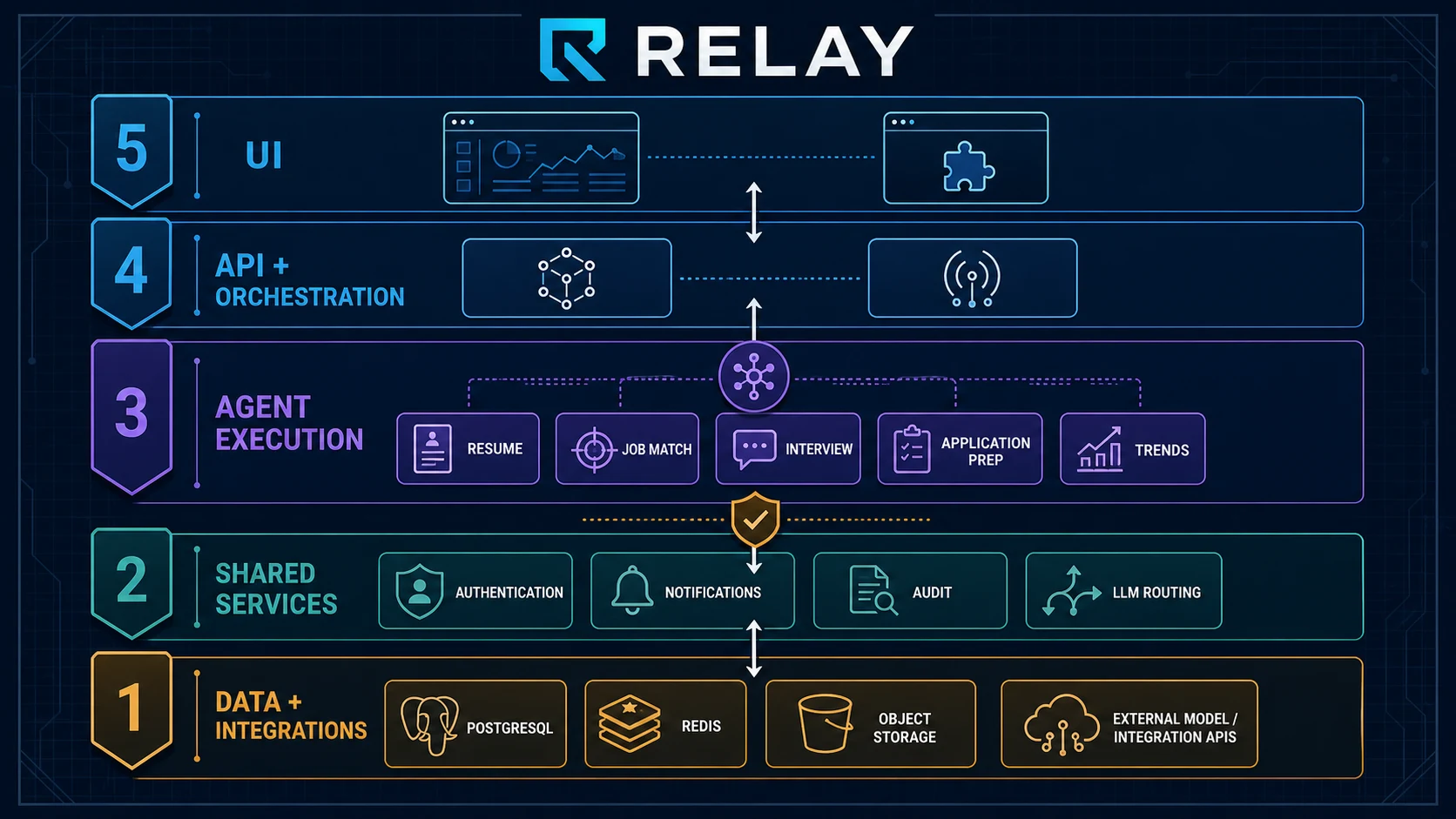
Technical diagram showing the five-layer architecture of the Relay job-search Agent system: UI layer, API orchestration layer, Agent execution layer, shared services layer, and data and integration layer

Building a Production-Grade AI Agent System from Scratch: A Full Architecture Breakdown of Relay

“Most Agent projects die in the unmapped wilderness between PoC and production.” I wrote that line while reading through the Relay project documentation. Relay is an open-source AI Agent system for job searching — not a demo built on three lines of LangChain plus GPT-4, but a project with complete architectural documentation, 172 engineering tasks, a hybrid tech stack, and explicit counterexamples for every major design decision. It is not fully running yet. The Agent layer code is still being written. That is exactly why I think this article is worth writing: this is a system that has thought very deeply at the design level, and those deep thoughts — regardless of where this project ultimately lands — are valuable references for everyone doing Agent engineering. ...

June 24, 2026 · 20 min · 4223 words · Xinwei Xiong, Me
A wide schematic of context engineering: the Write / Select / Compress / Isolate pillars feeding an AI, a laptop with notes, and a local-first world line

Context Is Not Prompt: Why Context Engineering Is Becoming AI's New Foundation

“We are not really writing prompts. We are furnishing a room for the model — deciding what gets carried in, where it sits, when it gets moved out. The wording is just a sticky note on the desk. What we are actually doing is the interior work.” If you had asked me in 2024 “how do I use AI well,” I would most likely have talked to you about prompts: how to phrase instructions, how to set a role, how to give examples. But if you asked me the same question today, my answer would be completely different. ...

June 22, 2026 · 16 min · 3259 words · Xinwei Xiong, Me
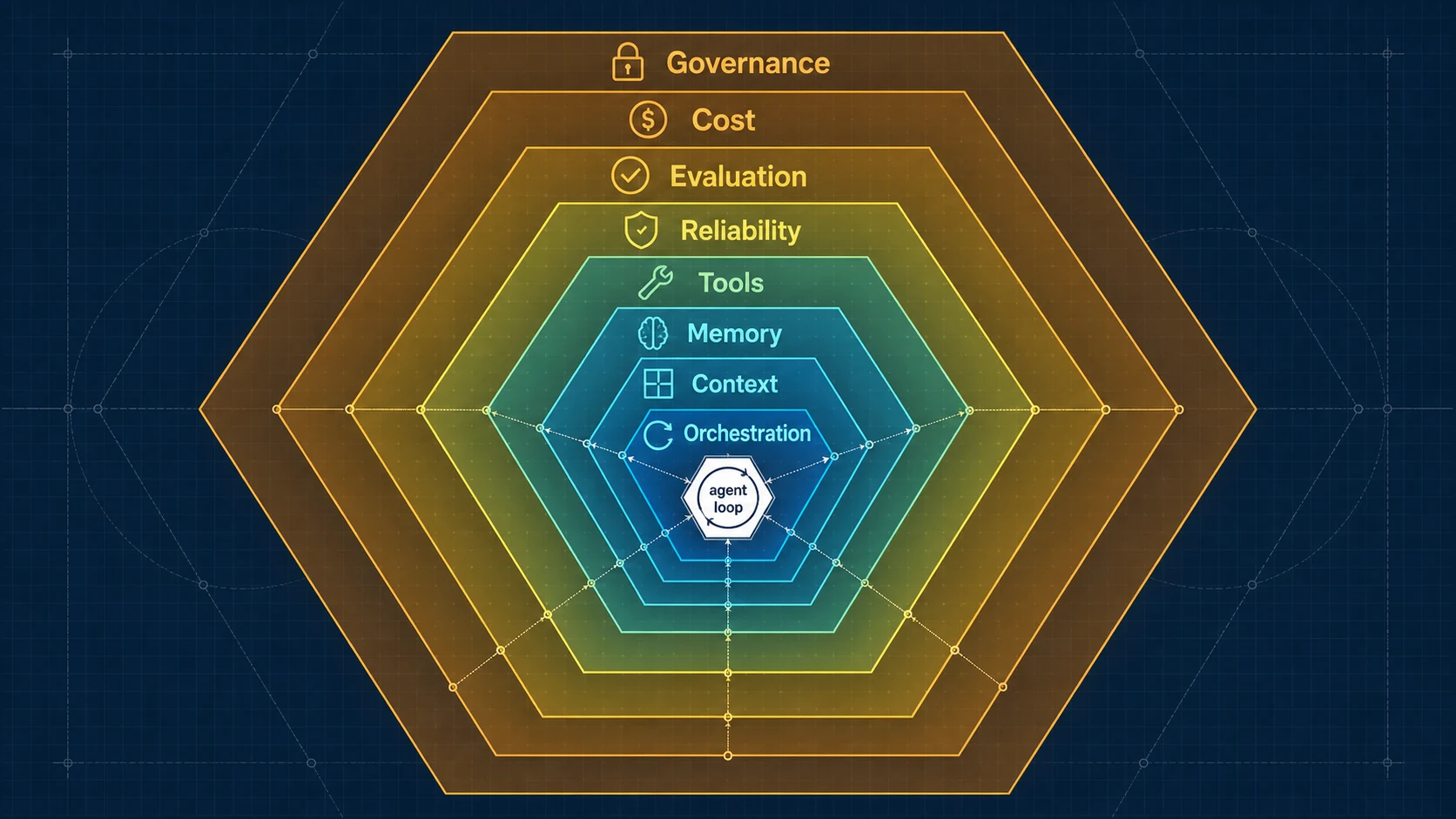
A technical diagram with a tiny agent loop at the center, surrounded by concentric rings of the eight pillars: orchestration, context, memory, tools, reliability, evaluation, cost, governance

The Agent Engineering Map: Where Does That 98.4% of the Work Actually Live?

“The agent loop is 10 lines of code. Agent engineering is 100,000 lines of code.” The first time I read that, I paused — and the more I sat with it, the sharper it cut. It punctures the single biggest illusion in this whole field: people think building an agent means writing a good prompt and wiring up an LLM API. But the actual work of pushing a demo to production — of running safely, unattended, all night long — is 99% not in that loop. ...

June 17, 2026 · 30 min · 6377 words · Xinwei Xiong, Me

MarkItDown: Convert Documents to Markdown

This project is an ongoing journey — learning AI open source projects with steady, daily progress. Through hands-on work with real projects and AI tooling, the goal is to develop the ability to solve complex problems and document the process. Notion List 1. Introduction 1.1. MarkItDown and Markdown — Clarifying the Relationship First, it is important to clarify that “MarkItDown” is not a misspelling of the general-purpose markup language “Markdown.” MarkItDown is a specific Python library developed and open-sourced by Microsoft. While its name resembles Markdown and its core purpose is to convert various file formats into Markdown, MarkItDown is an independent software entity. This article focuses on analyzing the implementation principles, design philosophy, features, and practical applications of the MarkItDown tool, while also referencing the Markdown language itself as the target output format when relevant. ...

April 21, 2025 · 22 min · 4521 words · Xinwei Xiong, Me

Large Language Models: How LLMs Work

LLM’s basic learning theory [toc] Introduction to large language models Large Language Model (LLM), also known as large language model, is an artificial intelligence model designed to understand and generate human language. LLMs typically refer to language models containing tens of billions (or more) of parameters that are trained on massive amounts of text data to gain a deep understanding of language. At present, well-known foreign LLMs include GPT-3.5, GPT-4, PaLM, Claude and LLaMA, etc., and domestic ones include Wenxinyiyan, iFlytek Spark, Tongyi Qianwen, ChatGLM, Baichuan, etc. ...

May 15, 2024 · 147 min · 31282 words · Xinwei Xiong, Me